.webp)
Ayurveda Mind-Body Healing, From the Inside Out

Updated: Aug 4
It was my very first trip to Vaidyagrama, an Ayurvedic healing village in South India.
I had initially traveled there to attend a conference, but my friend Nanette managed to talk me into a wild plan: cancel my flight home, stay behind, and volunteer to give treatments to the patients.
Ironically, she kept her own flight and headed home, leaving me to face the intense Indian heat and humidity completely on my own.

In this post:
The Core Shift: True healing isn’t about the Western "bootstraps" mentality of forcing positive thoughts through sheer willpower.
The Ayurvedic Path: True transformation comes from Shraddha (heart-centric faith) and the gradual softening of letting go.
The Body-Mind Link: Ancient texts and modern placebo research agree that physical purification through Panchakarma directly clears the mind and nervous system.
Contents:
From Volunteering to My Own Panchakarma Journey
The volunteering was grueling work.
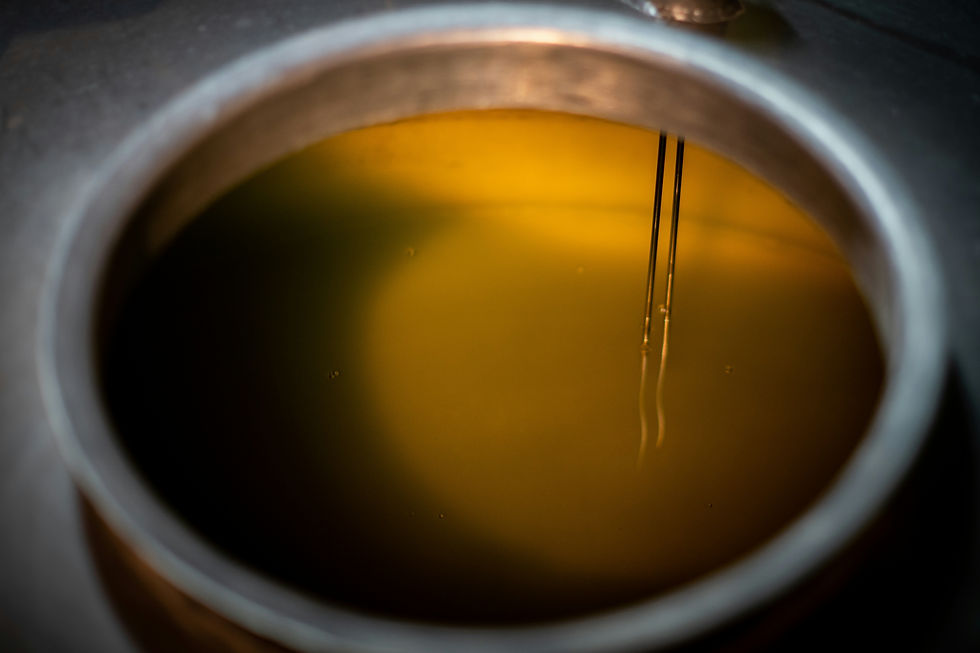
I spent long, exhausting days working with hot oils and herbal poultices, sweating so profusely that my main goal was simply not dripping on the patients.
My body quickly buckled under the strain.
The intense climate and physical labor triggered a severe reaction, leaving me with angry, swollen rashes on my calves that burned intensely every time my pant legs brushed against them.
By the time my third month rolled around, volunteering was out of the question.
Instead of giving treatments, I found myself on the other side of the table.
I was admitted as a patient to receive Panchakarma, desperately searching for a sense of Ayurveda mind-body healing that felt real.
The Advice That Triggered Me
When the doctors gathered to assess my burning rashes and overwhelmed system, one of them looked down at me with gentle eyes and offered a piece of advice that made me want to scream:
"Don't worry, be happy."
Internally, I scoffed.
In fact, I was deeply irritated.
My body was navigating the chaotic, unpredictable waters of perimenopause, my personal life back home was in the midst of tremendous upheavals, and now my skin was quite literally on fire.
To my Western-trained mind, his words sounded like the ultimate form of dismissive, toxic positivity.
What is Panchakarma? The Key to Ayurveda Mind-Body Healing
Before diving into how this advice transformed my health, it helps to understand the exact treatment I was receiving.
For those unfamiliar with the term, Panchakarma is the ultimate, deep-tissue detoxification and rejuvenation program in Ayurveda.
The word translates from Sanskrit to "five actions" or "five therapies."
Far more than a standard spa retreat or a surface-level cleanse, Panchakarma is a highly customized, medically supervised process designed to clear deep-seated physical and emotional toxins (āma) from the cellular memory.
The Core Benefits of Panchakarma
Clears Deep-Seated Toxins: Systematically flushes accumulated physical and emotional waste (ama) out of the cellular tissue.
Resets the Nervous System: Deeply conditions the nervous system to shift out of chronic stress and into a state of deep rest.
Restores Digestive Fire: Rekindles agni (digestive fire) to improve metabolic health and nutrient assimilation.
Reduces Physical Inflammation: Utilizes specialized oils and herbal therapies to soothe systemic irritation and skin reactions.
Clears Mental Fog: Drops the internal noise, allowing the mind to naturally transition toward Sattva (clarity and peace).
Through targeted herbal protocols, specialized oils, therapeutic massages, and deep rest, Panchakarma systematically resets the nervous system, bringing the body back into its natural state of balance.
The Charaka Samhita (Sutra Sthana, 16.17–19) perfectly summarizes this amazing transformation, stating that the correct administration of these purificatory therapies results in the "enhancement of digestion and metabolism, pacification of diseases, restoration of normal health, and improvement in clarity of the sense organs, mind, intellect, and complexion."
The ancient texts make it clear that a skillfully administered purification changes far more than your physical body; it directly clears your mind.
The "Bootstraps" Myth vs. Ayurvedic Surrender
When my doctor first told me to be happy, I completely confused his words with the familiar Western "bootstraps" mentality.
In the West, we are conditioned to believe that changing our mindset is an act of sheer force.
We are taught that if our thoughts or our health are failing, we must fix them through aggressive striving, grinding, and forcing our perspective into a positive alignment.
I thought he was placing the heavy burden of my healing entirely on my exhausted shoulders, telling me to just "try harder" to be cheerful amidst a storm.
Shifting from Doing to Being
It took me years and several return trips to Vaidyagrama to realize how deeply I had misunderstood him.
He wasn't giving me a bootstraps speech at all.
He wasn't asking me to do more or work harder at happiness; he was inviting me to stop fighting the current and drop the mental gripping.
The Slow Medicine of Panchakarma

We live in an era of rapid fixes.
When we embark on a detoxification or healing protocol, we expect immediate results, or at least a linear path to recovery.
In the world of Ayurveda, you often hear that it takes about nine months for the full physical effects of a deep Panchakarma cleanse to fully manifest in the cellular tissue.
My journey didn't follow a neat nine-month timeline.
The shift I needed wasn't just physical; it was a deep, tectonic restructuring of my mind.
I returned to Vaidyagrama multiple times over several years.
During each visit, the physical therapies did their work, but my mind remained a battlefield of worry and resistance.
I was trying so hard to heal, trying so hard to find peace, and trying so hard to manage the upheavals waiting for me back home.
The Art of Surrender
Then, somewhere along the way, the realization snuck in.
Without me actively trying to cultivate it, it stealthily settled into my mind and body,
It happened when I finally ran out of the energy required to control everything.
The understanding arrived because I stopped trying to force it to arrive.
I began to see that the doctors were asking me to drop my weapons and trust the process.
The Science of Expectation: A Brief Look at the Placebo Effect and Pain Relief
While this concept sounds deeply spiritual, modern science is beginning to catch up to what these ancient lineages have known for thousands of years.
We often treat the mind and the body as two separate entities, but modern neurological research shows they speak the exact same language.
Consider the link between the placebo effect and pain relief.
For decades, the placebo effect was dismissed as a trick of the mind, a psychological fluke.
How Belief Changes Brain Biology
Today, clinical studies utilize advanced brain imaging to show that when a patient genuinely believes they are receiving a powerful painkiller, their brain actually releases endogenous endorphins and alters physical pain pathways.
The belief itself changes the brain's biology.
Shifting from Survival to Healing
If a simple sugar pill, backed by expectation, can physically alter how our nervous system processes pain, imagine the systemic impact of our chronic internal narratives.
When we exist in a state of perpetual worry, our biology responds as if we are under constant attack.
Conversely, when we cultivate a deep sense of internal safety, we signal to our nervous system that it is safe to shift from survival mode into healing mode.
Ayurvedic Psychology: The Healing Power of Faith and the Art of Letting Go
In my continuing education classes with the traditional doctors at Vaidyagrama, we dive deeply into the ancient texts to understand how Ayurveda views the human psyche.
This topic of how important faith and the mind are to healing came up in a class about the digestive fire (agni), not a class about the mind.
In the Vedic model, the mind is the absolute bridge to physical health.
This connection is exactly what the ancient sage Charaka mapped out thousands of years ago in the Charaka Samhita (Vimana Sthana, 2.9), noting that emotional agitation like anxiety and worry directly disrupts agni, preventing even the healthiest food from turning into vital energy.
The Three Gunas of the Mind
It is governed by three primary qualities, or mahagunas:
Sattva: The state of clarity, peace, light, and balance.
Rajas: The state of action, agitation, passion, and movement.
Tamas: The state of inertia, darkness, heaviness, and stagnation.
When I first arrived in India, my mind was entirely consumed by Rajas.
I was highly agitated, fiercely trying to fix my life, and reacting to the hormonal shifts of perimenopause with frantic mental activity.
When my doctor told me to "be happy," my Rajasic mind thought:
Okay, how do I execute that task?
Defining Shraddha and the Cost of Worry
What the doctor was actually pointing toward was faith (śraddhā).
In the West, we tend to think of faith as blind religious belief.
In Ayurveda, Shraddha is something far more grounded.
It is a heart-centric confidence, a deep, cellular trust in the organic intelligence of life and the healing process.
This aligns with the timeless definition of health recorded by the sage Sushruta in the Sushruta Samhita (Sutra Sthana, 15.41). He wrote that true wellness is impossible without a serene, peaceful mind and spirit, proving that physical tissue health is entirely dependent on our psychological state.
When we lack Shraddha, we fall into a pattern of Prajnaparadha, which translates to "intellectual blasphemy" or crimes against our own wisdom.
In the Charaka Samhita (Sharira Sthana, 1.102), this state of mental gripping and resisting reality is described as the moment our intellect loses its connection to our heart's deeper truth, forcing the nervous system into a state of perpetual defense.
We know we need rest, but our attachment to control forces us to keep running.
We know we cannot control the external upheavals of our lives, yet we spend hours worrying about them anyway.
Letting go of attachment isn't about giving up; it is the ultimate act of intellectual wisdom.
It is moving from the frantic control of Rajas into the spacious, trusting clarity of Sattva.
Ayurvedic View on Mind and Body

Learning directly from the doctors at Vaidyagrama has completely reshaped how I view my role as a practitioner and a student of this medicine.
The traditional Ayurvedic view on mind and body challenges how we view health in the West, where we treat wellness as a state achieved solely through a perfect diet, perfect exercise, and perfect supplementation.
It is an aggressive, metrics-driven pursuit.
Ayurveda teaches a completely different paradigm.
While you will see photos of traditional altars, a Shiva lingam, or sacred fire ceremonies throughout my journey, it is vital to know that Shraddha belongs to no single religion or culture.
You do not need to follow Hindu practices or change your personal belief system to access this medicine.
In this context, faith is simply your own internal capacity to soften your grip and trust the organic process of your own healing.
The Mind as the Architect of Tissue
The ancient texts view the mind as the ultimate architect of our physiology.
One of the greatest lessons my teachers have emphasized is that the body cannot heal a tissue that the mind refuses to let go of.
If we hold onto grief, anger, or the desperate need to control our outcomes, our physical bodies remain rigid.
The therapies of Panchakarma, the oils, the steam, and the herbs, are not just designed to flush physical toxins from the liver or the gut.
They are designed to soften the physical nervous system so deeply that the mind finally feels safe enough to release its psychological grip.
FAQs
What is the connection between Ayurveda, the mind, and body healing?
In Ayurveda, the mind and body are entirely inseparable. The ancient texts view the mind as the absolute architect of your physical health, meaning that emotional stress, worry, and mental gripping directly impair your agni (digestive fire) and compromise your physical tissue healing.
What are the main benefits of a traditional Panchakarma?
A traditional Panchakarma program systematically flushes deep-seated toxins (ama) from cellular memory, resets the nervous system from stress to deep rest, restores digestive fire, and clears mental fog by moving the mind into Sattva (clarity and peace).
How does the placebo effect prove mind-body healing?
Modern clinical studies utilize advanced brain imaging to show that a patient’s deep-seated beliefs and expectations can trigger the brain to release its own pain-relieving endorphins. This scientifically proves that changing your internal narrative fundamentally alters your physical biology.
What does faith or Shraddha mean in Ayurvedic psychology?
In Ayurveda, faith is not blind religious belief. It is Shraddha, which translates to a deep, heart-centric confidence and cellular trust in the organic intelligence of life and your own internal healing process.
Why is forcing positive thinking harmful to healing?
Forcing positive thinking treats emotional healing as an aggressive task, which mimics the exhausting Western "bootstraps" mentality. Trying to force a smile through life upheavals or perimenopause creates internal resistance, whereas true healing requires softening and letting go of control.
Healing Without Trying
If you are currently navigating a major life transition, feeling overwhelmed by circumstances beyond your control, or seeking perimenopause emotional healing, I want you to remember my story.
If someone tells you to "just stay positive" or "don't worry," it is entirely valid if you want to scoff.
Remember, bootstraps and the exhausting emotional labor of forcing yourself to smile through your pain are not prescribed here.
Beyond Willpower: The Power of Softening
True Ayurvedic healing is the gradual softening that happens over time when you allow yourself to be held by a process and embrace faith.
It is the realization that you do not have to orchestrate your own healing through willpower.
Sometimes, the most profound health transformation occurs when you simply stop fighting, surrender your attachments, and let peace sneak in when you least expect it.
Ready to Soften Your Grip?
If you are exhausted from trying to force your way through chronic stress, systemic inflammation, or perimenopause upheavals you do not have to navigate this alone.
Let’s explore how authentic Ayurveda can support your unique mind-body constitution.
A gentle, zero-pressure space to connect, share your health journey, and see if a personalized Ayurvedic consultation is the right next step for your healing.
Next Up For You
For Deeper Guidance on This Topic: Explore our complete guides on
Calm the System: If you are feeling overwhelmed by internal heat or racing thoughts, try these Warming Soups for Sleep: 4 Ayurvedic Vata Recipes to Calm Fall Restlessness to soothe your nervous system from the kitchen.
Deepen Your Practice: Discover how daily rhythms impact your mental clarity by reading our free download 5 Gentle Ayurvedic Practices to Start Tomorrow Booklet.
Stay Connected
If you enjoyed these reflections on traditional Ayurveda and mind-body healing, sign up for my newsletter below to receive gentle wellness practices, upcoming workshop updates, and kitchen remedies delivered straight to your inbox.
If you know someone who may benefit from this post, please share it with them.
References & Resources
Classical Ayurvedic Texts
Purification Benefits: Read the literal scriptural translation of the Charaka Samhita (Sutra Sthana, Chapter 16, 17-19).
Mental Digestion & Agni: Review the classical context of emotional disruption on metabolic health in the Charaka Samhita (Vimana Sthana, Chapter 2, 9).
The Root of Disease: Study the scriptural definition of mental gripping and crimes against wisdom in the Charaka Samhita (Sharira Sthana, Chapter 1, 102).
Definition of Complete Health: Read the foundational verse on the necessity of a serene mind for physical wellness in the Sushruta Samhita (Sutra Sthana, Chapter 15, 41).
Western Scientific Research
The Power of the Placebo Effect: Explore how expectation fundamentally alters physical brain biology via the National Institutes of Health (NIH) Placebo Study.
Stress and the Nervous System: Review the physical symptoms and biological toll of chronic worry via the Mayo Clinic Stress Management Guide.
Perimenopause Statistics & Realities: Read the comprehensive clinical overview of female endocrine transitions via the World Health Organization (WHO) Menopause Fact Sheet.


Comments