.webp)
Ayurvedic Oral Care: A Gentle Morning Ritual for Whole-Body Health After 40

Updated: Aug 4
In Ayurveda, the way you begin your morning matters.
Before coffee, before emails, before the day asks anything of you, there is a quiet opportunity to tend to the body gently and intentionally.
One of the most overlooked and powerful ways to do this is through Ayurvedic oral care.
Far more than dental hygiene, Ayurvedic oral care is a daily ritual that supports digestion, nervous system balance, hormonal transitions, and overall vitality, especially after 40.
It is simple, grounding, and connected to how we process not just food, but life itself.

Contents:
What Is Ayurvedic Oral Care?
Ayurvedic oral care is the practice of cleansing and nourishing the mouth as part of a holistic daily routine.
In Ayurveda, the mouth is considered the gateway to digestion, perception, and communication.
What happens here influences the entire system.
Rather than focusing solely on teeth, Ayurvedic oral care addresses the tongue, gums, saliva, and tissues of the mouth as reflections of internal health.
In my clinical experience, Ayurvedic oral care is often one of the simplest shifts that brings noticeable improvements in digestion, gum health, and morning clarity, especially for women navigating midlife changes.
Ayurvedic Oral Care as Part of Dinacharya (Daily Routine)
In classical Ayurveda, daily practices are known as dinacharya.
These rituals are designed to align the body with natural rhythms and support long-term balance.
Ayurvedic daily routine oral care is traditionally performed first thing in the morning, before eating or drinking.
Why so early?
Because overnight, the body undergoes natural detoxification.
Waste products, known as ama, rise to the surface, often visible as a coating on the tongue or felt as heaviness in the mouth.
Cleansing the mouth in the morning supports a clear pathway from:
mouth → digestion → nervous system → mind
This is why Ayurveda morning oral care is never just about fresh breath.
It is about setting the tone for the entire day.
One who wishes to protect health should regularly follow daily regimens such as cleansing of the teeth and mouth, scraping of the tongue, and care of the senses (Charaka Samhita, Sutrasthana, 5, 71–74).
Why Oral Health Matters in Ayurveda Beyond Teeth and Gums
From an Ayurvedic perspective, Ayurvedic oral health is inseparable from digestion (agni) and toxin accumulation (ama).
A coated tongue, inflamed gums, or dry mouth are not just local issues; they are signs of systemic imbalance.
When ama accumulates in the mouth, it can impair digestion, dull mental clarity, and strain immune function.
Gentle, consistent oral care helps keep digestive fire clear and supports the body’s natural detoxification pathways.
Why Ayurvedic Oral Care Is Especially Supportive After 40

Midlife brings subtle but significant changes to the body.
Hormonal shifts, increased dryness, nervous system sensitivity, and changes in digestion all influence the mouth.
This is where Ayurvedic oral care for women over 40 becomes especially supportive.
Oral Care for Women Over 40 in Ayurveda
After 40, many women notice:
Increased gum sensitivity
Dry mouth upon waking
Bleeding or receding gums
Heightened reactivity to harsh products
Ayurveda recognizes this phase of life as one where Vata qualities, dry, rough, light, cold, and mobile, naturally increase.
Without grounding daily rituals, these qualities can show up in the mouth first.
Oral care for women over 40 is not about doing more.
It is about choosing practices that nourish rather than strip, calm rather than stimulate.
Explore the 20 Qualities of Ayurveda in this post: 20 Gunas (Qualities) of Ayurveda
Menopause, Dryness, and Inflammation in the Mouth
During perimenopause and the years after menopause, declining estrogen can affect saliva production, gum tissue integrity, and inflammation levels.
Ayurvedic menopause oral health places strong emphasis on lubrication, nourishment, and cooling when needed.
Symptoms like dry mouth, tender gums, or increased sensitivity are common, and they respond beautifully to gentle oil-based practices when used consistently.
With advancing age, Vata increases naturally, leading to dryness, roughness, and sensitivity in the body (Ashtanga Hridaya, Sutrasthana, 1, 8–10).
The Ayurvedic Oral Care Routine (Step-by-Step Morning Practice)
An Ayurvedic oral care routine does not need to be complicated.
In fact, simplicity is what makes it sustainable.
A Gentle Morning Oral Care Ayurveda Sequence
A traditional morning oral care Ayurveda practice includes:
Tongue scraping
Brushing with herbal or gum powder
Oil pulling (oil swishing)
This sequence takes just a few minutes, yet it supports digestion, gum health, and nervous system regulation throughout the day.
Tongue Scraping in Ayurveda: Clearing Ama Before the Day Begins
Tongue scraping is one of the most foundational practices in Ayurvedic oral care.
How Tongue Scraping in Ayurveda Supports Digestion and Clarity
During tongue scraping, the tongue is gently cleaned to remove the layer of ama that accumulates overnight.
This practice supports:
Improved digestion
Clearer taste perception
Fresher breath
Reduced toxin reabsorption
By removing this coating (although it may not all come off the first day), you help ignite digestive fire before your first meal.
Toxins, Ama, and the Mouth in Ayurveda
According to Ayurveda, the mouth is one of the first places toxins become visible.
Toxins (ama) in the mouth are observable.
A thick, sticky, white, yellow, or grey coating on the tongue indicates incomplete digestion and toxin buildup.
Tongue scraping helps prevent these toxins from being swallowed back into the system.
After rising in the morning, one should examine the tongue and remove the coating that has accumulated, as it is produced by impurities and obstructs digestion (Ashtanga Hridaya, Sutrasthana, 2, 1–3).
How to Scrape the Tongue Gently and Effectively

Use a stainless steel or copper scraper (avoid plastic)
Scrape gently from back to front
Repeat 5–10 times
Rinse the scraper between passes
Pressure should always be light, and don't try to remove all of the coating.
The coating will fade over time as the ama is released from your body.
This is gentle oral care in Ayurveda, not a harsh cleansing.
If you’re looking for a copper tongue scraper, Athreya Herbs offers one. If it’s helpful, you can use my code wisewomanayurveda for a 15% discount at checkout.
I often remind clients that tongue scraping is not about scrubbing harder; it’s about listening to what the body has accumulated overnight and responding gently.
Brushing with Ayurvedic Gum Powder for Healthy Gums and Teeth

After tongue scraping, brushing the teeth is the next step in Ayurvedic dental care.
What Is Ayurvedic Gum Powder?
Ayurvedic gum powder is a blend of powdered herbs traditionally used to support gum strength, oral cleanliness, and balanced microbial health.
These powders often include bitter, astringent, and pungent tastes that naturally cleanse without disrupting oral tissues.
Ayurveda tells us that these tastes actually secure the gums to the teeth, whereas the sweet taste (typical in most toothpastes) loosens the gums from the teeth.
Sometimes, like this morning, I just use a simple neem powder, which is bitter and astringent and wonderful for the gums.
Ayurvedic Dental Care Benefits of Herbal Powders
Unlike conventional toothpaste, Ayurvedic dental care focuses on strengthening gums and maintaining balance rather than whitening or foaming.
Benefits include:
Improved gum tone
Reduced inflammation
Support for healthy oral bacteria
Gentle cleansing for sensitive mouths
The teeth and gums should be cleaned daily using herbal substances that are bitter, pungent, and astringent, as these strengthen the gums and prevent diseases of the mouth (Sushruta Samhita, Chikitsasthana, 24, 6–8).
Choosing a Gentle Gum Powder for Sensitive Mouths
If you experience bleeding gums, recession, or tenderness, choose a formula designed for gentle oral care in Ayurveda.
Avoid overly abrasive powders and focus on consistency rather than intensity.
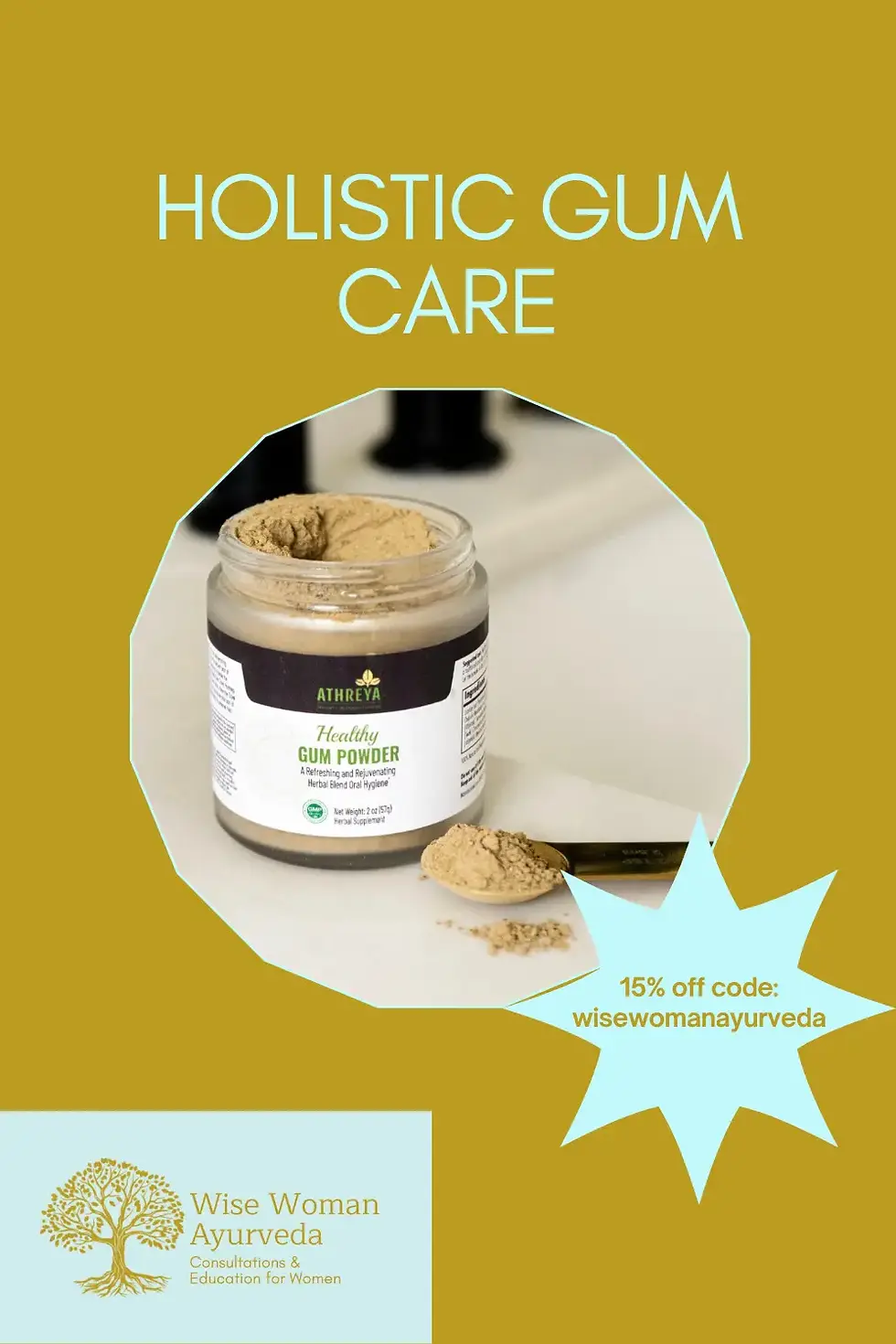
If you’re looking for a traditional option, Athreya Herbs offers an Ayurvedic gum powder made with classic bitter and astringent herbs to support gentle oral care. If it’s helpful, you can use my code wisewomanayurveda for a 15% discount at checkout.
For many women over 40, gum sensitivity or bleeding is not a hygiene failure, but rather a signal that the tissues need more nourishment and less force.
Oil Pulling in Ayurveda: Nourishing the Mouth and Nervous System
Oil pulling is one of the most nourishing practices within Ayurvedic oral care.
Why Oil Pulling in Ayurveda Is Recommended in the Morning
Oil pulling in Ayurveda involves swishing oil in the mouth to lubricate tissues, draw out toxins, and calm the nervous system.
Done in the morning, it counteracts overnight dryness and supports clarity.
Holding oil in the mouth strengthens the jaws, improves the voice, nourishes the tissues of the mouth, and prevents dryness and cracking (Charaka Samhita, Sutrasthana, 5, 78–80).
Best Oils for Gum Health and Dryness

For gum health, Ayurveda says oil choice matters:
Sesame oil: warming, grounding, ideal for dryness and Vata imbalance
Coconut oil: cooling, soothing, helpful for inflammation or heat
Swish Oils: specially formulated with herbs for healing the gums
Even warm water or milk (for acidity in the mouth) can be used effectively
Your constitution, current state of balance, and the climate should guide your choice.
If you’re looking for a traditional option, Athreya Herbs offers a Swish Oil made with a classic herb blend to support gentle oral care. If it’s helpful, you can use my code wisewomanayurveda for a 15% discount at checkout.
Oil Pulling Tips for Dry Mouth and Sensitive Gums
If you experience dry mouth, Ayurveda recommends:
Swish gently, not vigorously
Start with 2–3 minutes and build up to 20 minutes as a more therapeutic practice
This practice should feel soothing, not tiring.
Oil pulling is one of the most regulating practices I recommend for dry mouth, nervous system depletion, and hormonal transitions.
How Ayurvedic Oral Care Supports Whole-Body Health

Ayurveda never separates the mouth from the rest of the body.
Oral Care as a Foundation for Digestion and Detoxification
Strong Ayurvedic oral health supports the digestive fire by preparing enzymes, clearing ama, and signaling readiness to eat.
When the mouth is clean and nourished, digestion downstream improves naturally.
Natural Oral Care Ayurveda and the Gut–Brain Connection
Ayurvedic natural oral care also influences the gut–brain axis.
Gentle morning rituals calm the nervous system and reduce stress reactivity, which is especially important in midlife.
Making Ayurvedic Oral Care a Sustainable Daily Ritual
The most powerful practices are the ones you actually do.
Creating a Simple Ayurvedic Oral Care Routine You’ll Actually Keep
An effective Ayurvedic oral care routine does not require perfection.
Even one or two practices done consistently can create meaningful change.
Start where you are.
Build slowly.
Consistency Over Perfection in Ayurvedic Daily Practices
This philosophy, awareness over perfection, is central to Ayurveda.
Missing a day is not a failure.
Returning gently is the practice.
Ayurveda doesn't promote everything perfectly, intead it recommends returning to rhythm again and again, even when we fall off the wagon.
Gentle Ayurvedic Oral Care Tips by Dosha and Life Stage
Ayurveda teaches us to individualize.
Vata Tendencies: Dryness, Sensitivity, Nervous System Support
Vata-predominant individuals benefit most from Ayurvedic gentle oral care with oil pulling and warming practices.
Pitta Tendencies: Inflammation, Heat, and Gum Tenderness
Pitta imbalance may show up as redness, bleeding, or tenderness, often heightened during menopause.
Cooling oils and gentle, bitter, and astringent powders are key.
Kapha Tendencies: Heaviness, Coating, and Congestion
Kapha types benefit greatly from consistent tongue scraping to reduce coating and stagnation.
Bitter and astringent gum powders help remove excess sweetness from the Kapha oral microbiome.
FAQs: Ayurvedic Oral Care
What is Ayurvedic oral care?
Ayurvedic oral care is a traditional morning ritual that includes tongue scraping, brushing with herbal or gum powders, and oil pulling to support oral health, digestion, and whole-body balance.
What is the best Ayurvedic oral care routine in the morning?
A simple Ayurvedic oral care routine includes tongue scraping, gentle brushing with Ayurvedic gum powder, oil pulling, and rinsing the mouth before drinking water. This Ayurvedic morning oral care practice helps clear toxins and awaken digestion.
Why does Ayurveda recommend tongue scraping?
Ayurvedic tongue scraping is used to remove ama, or toxins, that accumulate overnight. Clearing the tongue supports digestion, improves taste perception, and prevents toxins from being reabsorbed into the body.
Is oil pulling safe for dry mouth or sensitive gums?
Yes. When done gently, oil pulling Ayurveda is especially supportive for dry mouth, sensitive gums, and menopause-related oral changes. Using sesame or coconut oil can help nourish tissues and improve gum health in Ayurveda.
What is Ayurvedic gum powder, and how does it work?
Ayurvedic gum powder is a blend of traditional herbs used for Ayurvedic dental care. These powders strengthen gums, reduce inflammation, and support oral health in Ayurveda without harsh chemicals.
How does Ayurvedic oral care support menopause and aging?
In menopause oral health, Ayurveda focuses on addressing dryness, inflammation, and tissue sensitivity. Gentle oral care practices help balance increasing Vata and support long-term gum and tooth health.
Can Ayurvedic oral care improve digestion?
Yes. Ayurveda teaches that digestion begins in the mouth. Ayurvedic daily routine oral care helps stimulate digestive fire and reduce toxins before food is consumed.
Is Ayurvedic oral care suitable for women over 40?
Ayurvedic oral care is especially beneficial for women over 40 because it emphasizes nourishment, consistency, and gentle practices that support hormonal and nervous system changes.
Beginning Your Day with Ayurvedic Oral Care
Ayurvedic oral care is a quiet ritual that asks very little yet offers excellent support.
A Quiet Morning Ritual That Sets the Tone for the Day
By tending to the mouth first, you signal care, presence, and intention.
Ayurvedic oral care becomes a moment of self-connection before the world enters.
Ayurvedic oral care invites us to begin the day in relationship with the body, rather than rushing past it.
When to Keep It Simple—and When to Go Deeper
Some seasons call for simplicity.
Others invite deeper exploration of morning routines, digestion, or sleep support.
Let your body lead.
This is the wisdom of Ayurveda, meeting yourself where you are, every morning, one gentle ritual at a time.
If you know someone who would benefit from this post, please share it with them.
Resources for deepening your Ayurvedic journey:


Comments