.webp)
5 Best Cooking Methods to Cool Your Pitta Dosha

Updated: Aug 4
If you scroll through social media right now, you'll see a million influencers telling you to start your day with an iced smoothie or a raw superfood bowl.
But as an Ayurvedic practitioner, I see these 'wellness trends' causing hidden havoc in my clients' bodies every day, especially for those with a fiery constitution and those in or transitioning into the Vata time of life.
I remember doing a raw juice cleanse years ago while living in Brooklyn, NY, and my Vata became so aggravated that my body was literally vibrating and I couldn't keep a thought in my head.
When you think about an Ayurvedic diet, your mind likely goes straight to lists of ingredients.
You might think about favoring sweet, astringent fruits (like apples and pears) or avoiding spicy chili peppers.
While choosing the right ingredients is a massive piece of the puzzle, how you prepare those ingredients is just as critical.
In Ayurveda, cooking is an act of transformation.
The specific techniques you use in the kitchen can either increase the heat of a dish or help cool your internal fire.
If you are dealing with a Pitta imbalance, understanding Pitta dosha cooking methods is the missing link to reclaiming your physical and mental harmony.
TL;DR: Cooking for Pitta at a Glance
The Goal: Pacify internal fire (Pitta) and stabilize digestion without adding heavy, irritating dampness or dryness.
Best Methods: Lean into steaming, baking at moderate temperatures, and gentle sautéeing with cooling fats like ghee or coconut oil.
What to Avoid: Steer clear of high-heat deep frying, charring/grilling, and repeatedly reheating leftovers.
Is your digestion feeling a little too fiery?
If you are struggling with acid reflux, chronic inflammation, or finding that balanced "middle path" in your modern kitchen, let's look at your unique constitution together.
Book a private Ayurvedic consultation with me here to get a customized, practical roadmap for your body's needs.
Contents:
Finding the Best Cooking Styles for Pitta
To understand how to cook for Pitta dosha, we have to look at the foundational principles of Ayurvedic bio-energetics.
Pitta is governed by the elements of fire and water.
When your Pitta is in balance, this fire manifests as sharp intelligence, strong digestion, and vibrant leadership.
When Pitta overflows, it turns into internal heat, skin inflammation, acid reflux, and irritability.
While overheating is a major concern, it is equally important to recognize when your preparation style is aggravating Pitta's liquid nature, causing food to digest too quickly without proper assimilation.
If you eat the right foods cooked the wrong way, you can accidentally trigger a Pitta flare-up.
The Reality of Cooking and Food Energetics
Every time you apply heat to food, you alter its texture, moisture level, and warmth, even though its underlying cooling nature remains unchanged.
For instance, a naturally cooling food like coconut or basmati rice maintains its cooling essence even when served warm.
A common misconception has emerged in Ayurveda in the Western world that a Pitta-balancing diet must revolve around raw, cold foods like salads to extinguish internal heat.
In reality, raw food is incredibly difficult to digest because it lacks the transformative element of fire.
When we are younger, our central digestive fire (jatharāgni) is often strong enough to process cold, raw meals with ease.
However, as we age and transition into the later stages of life, our innate digestive power naturally evolves.
Without the assistance of external cooking to break down tough plant walls, raw foods can completely overwhelm a mature digestive system, causing food to sit heavily rather than providing clean, cooling nourishment.
Furthermore, as women transition into the post-menopausal stage of life, the body naturally requires cooked, grounded sustenance to manage emerging dryness.
True Pitta pacifying food preparation relies on cooking your ingredients thoroughly with cooling spices and fats.
This specific style of cooking satisfies a good appetite and provides deeply grounding nourishment without escalating internal heat or acidity.
Signs Your Cooking Style is Overheating You
How do you know if your current kitchen habits are working against your constitution?
Look out for these signs after eating:
A burning sensation in the stomach or throat
Sudden patches of flushed, warm skin
Feeling intensely thirsty right after a meal
An immediate spike in irritability or impatience
If you experience these symptoms regularly, your cooking style might be adding fuel to your internal fire.
Shifting toward Ayurvedic cooling cooking techniques will help soothe these symptoms from the inside out.
Balancing the Liquid Element of Pitta
Because Pitta is composed of both fire and water, it naturally possesses a fluid, spreading quality (drava and sara).
When your preparation methods introduce too much standing liquid or overly soggy textures, you risk drowning your central digestive fire (jatharāgni).
The goal of a balanced kitchen routine is to use cooking styles that maintain the structural integrity of your food, providing enough substance to ground your sharp appetite without adding heavy, irritating dampness.
The 5 Best Pitta-Pacifying Cooking Techniques
Karana (processing) is the making or refinement of the draya (substance), or the samskara (transformation processing) that are added to the properties of those substances. There properties are imparted by contact of water and fire, by cleansing, churning, place, time, infusing, steeping, etc., and also by the medium used for storage or processing (e.g., copper vessel, or earthen pot), etc. (Charaka Samhita, Vimanasthana, Ch 1, V 22).
By choosing gentle, stabilizing, and temperature-moderating preparation styles, you can enjoy deeply satisfying meals that actively pacify excess heat without drowning your digestive fire.
Here are the best cooking styles for Pitta to incorporate into your daily routine.
1. Steaming and Minimal-Water Cooking for Lightness

While water is inherently cooling, a common misconception is that a Pitta-balancing diet should consist entirely of heavy, soupy, or waterlogged meals.
According to classical texts like the Ashtanga Hridayam, Pitta already possesses the Drava (liquid) and Sara (spreading) qualities (Ashtanga Hridayam, Sutrasthana, Ch 1, V11).
When your digestive fire (agni) is running too sharp and fast, a state known as Tikshnagni, flooding your system with excessive liquid can cause food to digest too quickly, leading to poor nutrient absorption and loose stools.
This is exactly why steaming is a great cooking method for a Pitta kitchen.
Steaming applies gentle, hydrating heat without drowning the food.
It softens tough fibers and preserves the natural, grounding sweetness of vegetables like broccoli, asparagus, and zucchini, making them easy to digest (Ashtanga Hridayam, Sutrasthana, Ch 6, V 42).
More importantly, steaming allows you to skip heavy, overheating oils that clog the liver, while retaining enough structural dryness to keep your sharp agni (digestive fire)grounded and stable.
When you do boil grains or lentils like basmati rice and mung dal, cook them thoroughly until soft, but ensure they are fluffy and well-structured rather than swimming in standing water (but foods prepared with a lot of water are great for pacifying Vata dosha).
This balances Pitta's heat without aggravating its liquid nature.
2. Light Sautéeing with Ghee or Coconut Oil
While intense, unchecked heat can aggravate Pitta by adding an overly sharp (tikshna) quality to your digestion, a light saute is a fantastic way to wake up spices and soften vegetables.
The trick here lies entirely in your choice of cooking medium and temperature.
To keep this method firmly in the realm of Ayurvedic cooking techniques Pitta will love, use cooling fats as a protective buffer.
Ghee (clarified butter) and coconut oil are your best allies.
Ghee is highly revered in Ayurveda for its unique ability to cool the body while simultaneously strengthening agni (digestive fire) (Ashtanga Hridayam, Sutrasthana, Ch 5, V 37-39).
Coconut oil is naturally sweet and cooling, making it perfect for warm-weather cooking.
Keep your stove at a medium-low temperature.
Gently warm your fat, toss in cooling spices like fennel, coriander, or cardamom, and let your vegetables gently soften.
This method seals in flavor and prevents the food from absorbing harsh, piercing heat, keeping the overall energy of the dish remarkably gentle on your system.
3. Baking and Roasting with Cooling Spices
Because Pitta inherently possesses the drava (liquid) and sasneha (slightly oily) qualities, the dry heat of baking and roasting is highly beneficial.
It provides a wonderful stabilizing counter-attribute to a liquid-heavy constitution.
The real key with oven cooking is managing the temperature to ensure you do not introduce an overly sharp (tikshna) quality through charring or overheating (Charaka Samhita, Sutrasthana, Ch 26, V 86-101).
Roasting root vegetables, squash, or sweet potatoes at a moderate temperature coaxes out their natural sugars.
This sweet taste is highly grounding and nourishing for a fiery disposition (Ashtanga Sangraha, Sutrasthana, Ch 1, V 33-34).
To keep the thermal impact smooth and balanced, coat your ingredients with a small to moderate amount of ghee or coconut oil (depending on your body's oiliness) before they go into the oven.
Furthermore, you can complement the drying nature of baking by using cooling, aromatic herbs and spices.
Tossing your roasted dishes with fresh cilantro, fennel powder, or a splash of coconut milk toward the end of the cooking process keeps the meal balanced, grounded, and intensely satisfying without over-stimulating your blood or digestive tract.
A Note for Post-Menopause:
If you are in the post-menopausal stage of life, you have entered the Vata phase of life (Ashtanga Sangraha, Sutrasthana, Ch 1, V23), which naturally brings more systemic dryness (ruksha) into the physiology (Ashtanga Sangraha, Sutrasthana, Ch 1, V 26-28).
Even if you are cooking for a Pitta constitution or to pacify a primary Pitta imbalance, your body will require a bit more lubrication than it used to.
In this case, do not shy away from a slightly more generous application of ghee or coconut oil before roasting.
The drying environment of the oven, combined with the grounding qualities of the oil, creates the perfect therapeutic synergy to balance both your internal heat and the natural Vata in the later stages of life.
4. Finishing with Cooling Condiments
Because Pitta individuals naturally possess a sharp appetite (tikshnagni), the secret to a Pitta-balanced plate often lies in how you finish the dish.
Adding fresh, unheated, and cooling condiments at the very end of preparation is a powerful way to temper a meal's heat.
Incorporating a fresh cilantro sauce or a Pitta-balancing coconut chutney adds the necessary sweet and astringent tastes that instantly calm a fiery stomach.
These condiments provide a refreshing burst of flavor that satisfies a sharp palate without adding heavy, irritating oils or heating spices.
5. Incorporating Therapeutic Takra (Ayurvedic Buttermilk)

Takra alleviates all the three doshas. Ayurvedic buttermilk (Takra) prepared of the sweet variety of curd is unctuous (oily). It aggravates Kapha and alleviates Vata and Pitta. (Materia Medica of Ayurveda, Ch 8, V 7-8)
If you are looking for the ultimate digestive aid for a high-Pitta constitution, turn to the ancient wisdom of takra (Ayurvedic buttermilk).
While standard yogurt is heavy, sour, and inherently heating to the blood, properly prepared takra is a cooling elixir that works wonders for an overheated GI tract.
By whisking organic, plain yogurt with water and skimming off the heavy fat, you create a light, digestive drink that stabilizes agni without provoking inflammation.
To maximize its cooling potential, infuse your takra with targeted herbs.
A refreshing sweet rose takra, an aromatic mint takra, or a crisp cilantro takra serves as the perfect accompaniment to your midday meal.
These variations soothe the stomach's mucosal lining, reduce acidity, and ensure your sharp digestion stays perfectly balanced and smooth.
In Pitta, sweet variety of takra should be taken mixed with sugar (Materia Medica of Ayurveda, Ch 8, V 10).
Ayurvedic Cooking Techniques Pitta Constitutions Should Avoid
Just as important as knowing how to cook is knowing what techniques to step away from.
To keep your fire under control, try to eliminate or drastically minimize these high-heat, moisture-stripping methods.
Ice-Cold and Completely Raw Foods
While reaching for an ice-cold smoothie, a frozen dessert, a raw juice, or a large raw salad seems like the most logical way to cool down a hot afternoon, it can actually cause a major backfire in your digestive system.
In basic Ayurvedic theory, cold (Sheeta) and dry (Ruksha) attributes are known to pacify Pitta dosha by acting as direct opposites to its hot and liquid nature.
However, when you flood your stomach with ice-cold textures, your innate digestive fire (jatharāgni) is forced to work twice as hard just to heat the food up to body temperature before it can even begin to break down the food.
For a mature digestive system or someone navigating a delicate balance, this sudden shock doesn't cool the body.
Instead, it temporarily paralyzes your digestion, leading to bloating, gas, and stagnant food fermentation that ultimately creates even more internal heat and acidity.
The Middle Path:
Please know that Ayurveda is an incredibly forgiving, practical science.
Having a scoop of ice cream on a beautiful, hot summer afternoon is not the enemy here!
Your body is resilient and fully capable of handling occasional treats.
The real digestive issues arise from the repetitive, daily habit of flooding your system with frozen smoothies and raw meals under the guise of "health."
Enjoy the occasional cold treat mindfully, but keep your daily routine supportive of your inner fire.
Deep-Frying and Excessive Oil Heat
High-temperature frying forces heavy, boiling oil into the food, sparking a highly acidic, sour reaction during digestion.
Because the oily, hot, and sour qualities directly aggravate Pitta (Ashtanga Sangraha, Sutrasthana, Ch 1, V 26-28), deep-fried foods are a fast track to inflammation, skin breakouts, and hyperacidity.
Reheating Food and the Hidden Cost of Leftovers
Batch cooking and reheating meals is a standard survival strategy in most of our lives today.
However, from an Ayurvedic perspective, repeatedly applying heat to previously cooked food alters its structural integrity.
Classical texts refer to dead, leftover food as Paryushita.
When food is cooled down and reheated, it loses its vital life force energy (Prana) and becomes incredibly heavy and difficult to digest (IJHSR).
For a fiery constitution, reheated meals often take on a Vidahi quality.
This means the food breaks down with a sharp, sour, and burning reaction, acting like an internal heat trap that irritates the liver and blood.
When liquids or foods undergo improper temporal transitions (standing overnight, or Paryushita), their digestion (Pake) changes. They lose their light (Laghu) quality and turn Vidahi (causing internal heat and acid formation during metabolic breakdown) (Ayurveda Mahodadhi V 38).
However, we must walk a sensible middle path.
A home-cooked meal prepared with love the night before and gently reheated is still vastly superior, cleaner, and more balanced than highly processed fast food or restaurant meals loaded with hidden inflammatory oils.
If you must reheat your food, take a balanced approach: sprinkle a little water or a small dollop of cooling ghee over the dish before warming it to restore missing moisture and soften its impact on your digestive tract.
You can also sauté a little fresh ginger in some ghee in a pot, then add the leftover food to warm it, while helping it recover some of its life-force energy and making it more digestible.
The Inflammatory Fire of Grilling and Charred Foods
Cooking food directly over an open flame or charring it on a grill introduces the harsh qualities of smoke and extreme sharpness.
The black, charred bits on grilled foods carry a burnt (Dagdhanna) quality (IJHSR) that mimics pure, unchecked fire in the digestive tract, over-stimulating Agni and irritating the blood.
Western science aligns with this ancient caution, showing that intense, high-heat charring alters the molecular structure of food to create inflammatory compounds that tax your system.
If you love the rich depth of grilling, mimic it safely by baking your food at a moderate temperature and adding a glaze of ground coriander and maple syrup to create a sweet, cooling, caramelized, and un-charred finish.
The Hidden Heat of Popular Fermented Foods
Fermented foods like kombucha, kimchi, and sauerkraut are incredibly popular in modern wellness circles.
However, from an Ayurvedic perspective, fermentation is a process of pre-digestion driven entirely by heat and acidity.
This process amplifies the sour (Amla) taste and the sharp (Tikshna) property of whatever is being fermented.
Because these exact attributes directly provoke the fire element, consuming fermented items acts like throwing gasoline onto a Pitta flare-up.
If you are working to cool your system, it is best to step away from the trendy fermented products and choose fresh, unfermented alternatives instead, especially in summer.
A Day of Pitta-Balanced Cooking: Menu Example
To help you put these concepts into practice, here is what a perfectly executed day of Pitta-pacifying cooking looks like.
Notice how every single meal focuses on hydration, gentle heat, and cooling fats.
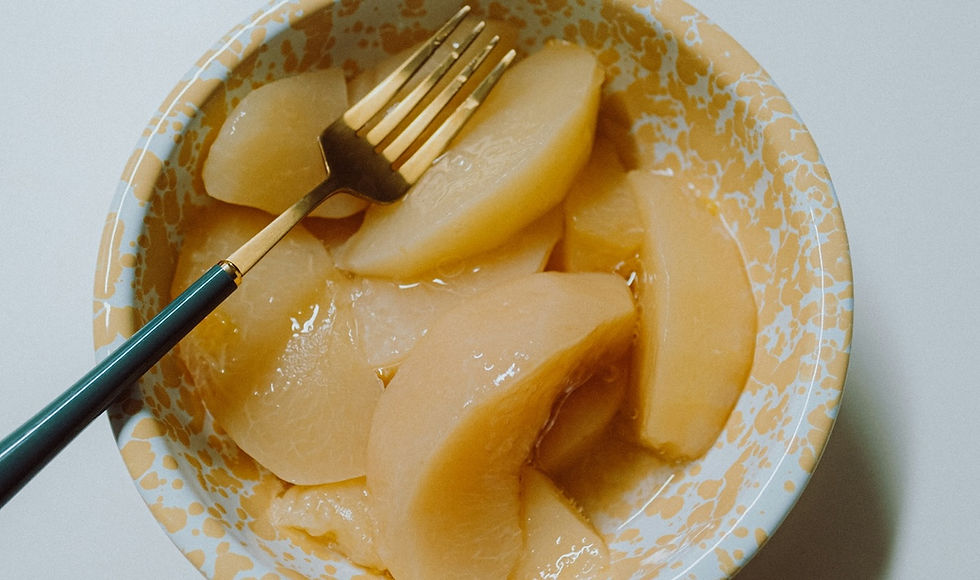
Breakfast: Steamed Pears with Cardamom
Start your morning by gently steaming sliced, ripe pears or apples in a small amount of water with ground cardamom sprinkled over top until they are fork-tender.
Drizzle them with a teaspoon of melted ghee, or if you're feeling that Pitta oiliness, omit the ghee.
This warm, cooling breakfast gently wakes up your digestion without triggering early morning acidity.
Lunch: Grounding Basmati Rice Bowl with Mung Dal and Sauteed Squash
Ayurveda tells us that lunch is the main meal of the day because the internal fire is at its peak; it needs to be the heaviest and most satisfying plate to help ground a sharp appetite.
Enjoy a generous bowl of fluffy basmati rice paired with well-structured, though thoroughly cooked lentils, like this French Lentil Dal.
For a side dish, lightly sautéed zucchini and yellow squash in coconut oil with fennel seeds and a pinch of turmeric.
Top the entire dish with a fresh avocado slice for grounding sustenance and a handful of crisp, fresh cilantro.
Dinner: Steamed Greens with Spiced Baked Sweet Potato
Keep your evening meal grounded and stable to support a restful, cool night of sleep.
For this meal, lightly coat slices of sweet potato or winter squash with a small amount of coconut oil, cinnamon, cardamom, and just a pinch of pink Himalayan salt.
Bake them at a moderate temperature until tender, which will make this an excellent example of mindful Pitta pacifying food preparation that allows natural sweetness to surface.
On the side, gently steam a portion of bitter greens, such as asparagus, kale, or Swiss chard, and sprinkle with fennel powder before steaming.
Steaming softens the tough fibers and preserves their cooling essence without introducing heavy, liver-clogging oils.
Top the plate with a fresh sprinkle of cooling chopped cilantro.
This combination provides structural substance that grounds a sharp appetite, ensuring your digestion stays perfectly balanced and calm throughout the night.
FAQs: Pitta Dosha Cooking Methods
Q: Is raw food always the best choice for cooling down a Pitta constitution?
A: While raw salads and cold juices seem like the obvious choice to extinguish internal heat, they are not ideal for everyone. Raw food requires a massive amount of internal fire to break down. When we are younger, our digestive fire is often sharp enough to process raw meals with ease. However, as we age and transition into maturity or post-menopause, our innate digestive power naturally evolves. To avoid overwhelming a mature digestive system, true Pitta pacifying food preparation relies on cooking ingredients thoroughly with cooling fats and aromatic spices, rather than consuming ice-cold, raw meals.
Q: Can cooking food change its underlying cooling or heating nature?
A: No, applying heat to a meal alters its texture, moisture levels, and immediate thermal qualities, but it does not change its intrinsic baseline nature. For example, a naturally cooling food like basmati rice or coconut retains its cooling essence even when cooked and served warm. This is why mastering specific Pitta dosha cooking methods is so powerful; you can enjoy warm, comforting, easily digestible meals that still naturally soothe internal heat and acidity.
Q: Why is steaming considered one of the best cooking styles for Pitta?
A: Steaming is highly celebrated among ayurvedic cooking techniques Pitta thrives on because it balances moisture without adding heavy, liver-clogging oil heat. Because Pitta naturally possesses a fluid, spreading quality, flooding your system with heavy, waterlogged soups can actually drown your digestive fire. Steaming applies gentle, hydrating heat that softens tough plant fibers while preserving enough structural integrity to keep a sharp appetite grounded and stable.
Q: How can I safely enjoy a warm meal without triggering acid reflux or a Pitta flare-up?
A: To learn how to cook for pitta dosha safely, you must lean into ayurvedic cooling cooking strategies rather than high-heat methods like deep-frying or open-flame grilling. Focus on baking at moderate temperatures, steaming, or lightly sautéeing your food in cooling mediums like ghee or coconut oil. To finish your plate, top your warm meals with cooling condiments like fresh cilantro, coconut chutney, or a refreshing glass of therapeutic takra to buffer any residual heat and keep your digestion smooth.
Conclusion: Transform Your Kitchen into a Cooling Sanctuary
Managing your fiery constitution can be achieved by mastering the subtle alchemy of temperature, moisture, and therapeutic intention.
True Pitta pacifying food preparation goes far beyond a simple list of raw ingredients.
By focusing on steaming, baking at moderate temperatures, and gentle sautéeing, you can completely transform the energetics of your meals.
Embracing these specific Pitta dosha cooking methods allows you to ground a sharp appetite and stabilize a liquid-heavy digestive system without drowning your internal fire.
Step away from the intense heat of the deep fryer or the open flame.
Instead, lean into Ayurvedic cooling cooking by utilizing gentle heat, balancing with cooling fats like ghee, and finishing your plate with refreshing condiments and therapeutic takra.
Once you understand the physics of how to cook for Pitta dosha, your kitchen becomes a powerful medicine cabinet.
Aligning your daily routine with these classical Ayurvedic cooking techniques allows your body to thrive naturally, keeping your digestion sharp, smooth, and perfectly balanced.
Experiment with these best cooking styles for Pitta and watch your body shift from inflammation to vibrant, steady harmony.
For deeper guidance on this topic, explore our complete guide on Pitta Nutrition and Digestive Health.
If you know someone who would benefit from this post, please share it with them.
How This Post Was Researched
The kitchen guidance in this article is based on years of personal clinical experience working with clients to cool their fiery symptoms, alongside my own journey navigating these practices.
Rather than following passing internet trends, these insights are drawn directly from classical Ayurvedic texts like the Charaka Samhita, Ashtanga Hridayam, and Ashtanga Sangraha to ensure the guidance is rooted in time-tested truth.
References & Additional Reading
Classical Ayurvedic Texts
Charaka Samhita (Online Edition): Vimanasthana, Ch. 1, V. 22 & Sutrasthana, Ch. 26, V. 86-101. Caraka Samhita Online. Available at: Charaka Samhita Online.
Ashtanga Hridayam: Sutrasthana, Ch. 1, V. 11; Ch. 5, V. 37-39; Ch. 6, V. 42. Translated by Prof. K.R. Srikantha Murthy, Ashtanga Hridayam of Vagbhata, 5th Edition, Krishnadas Academy, 2001.
Ashtanga Sangraha: Sutrasthana, Ch. 1, V. 23, V. 26-28, V. 33-34. Ashtanga Sangraha of Vagbhata, [Translator unknown / Edition details unavailable].
Materia Medica of Ayurveda: Ch. 8, V. 7-8 & V. 10. Based on Ayurveda Saukhyam of Todarananda, Translated by Vaidya Bhagwan Dash, Concept Publishing Company, 1980.
Ayurveda Mahodadhi: V. 38. Sushena's Ayurveda Mahodadhi Annapanavidhi (Dietetics in Ayurveda). Digital edition available at the Internet Archive.
Modern Scientific Resources
High-Heat Charring Compounds: Advanced Glycation End-products and Inflammatory Pathways — National Institutes of Health (PMC).
Modern Research on Leftovers: A Clinical Study on the Concepts of Paryushita Anna (Stale Food) and its Impact on Agni. You can find it here: International Journal of Health Sciences and Research (IJHSR).


Comments